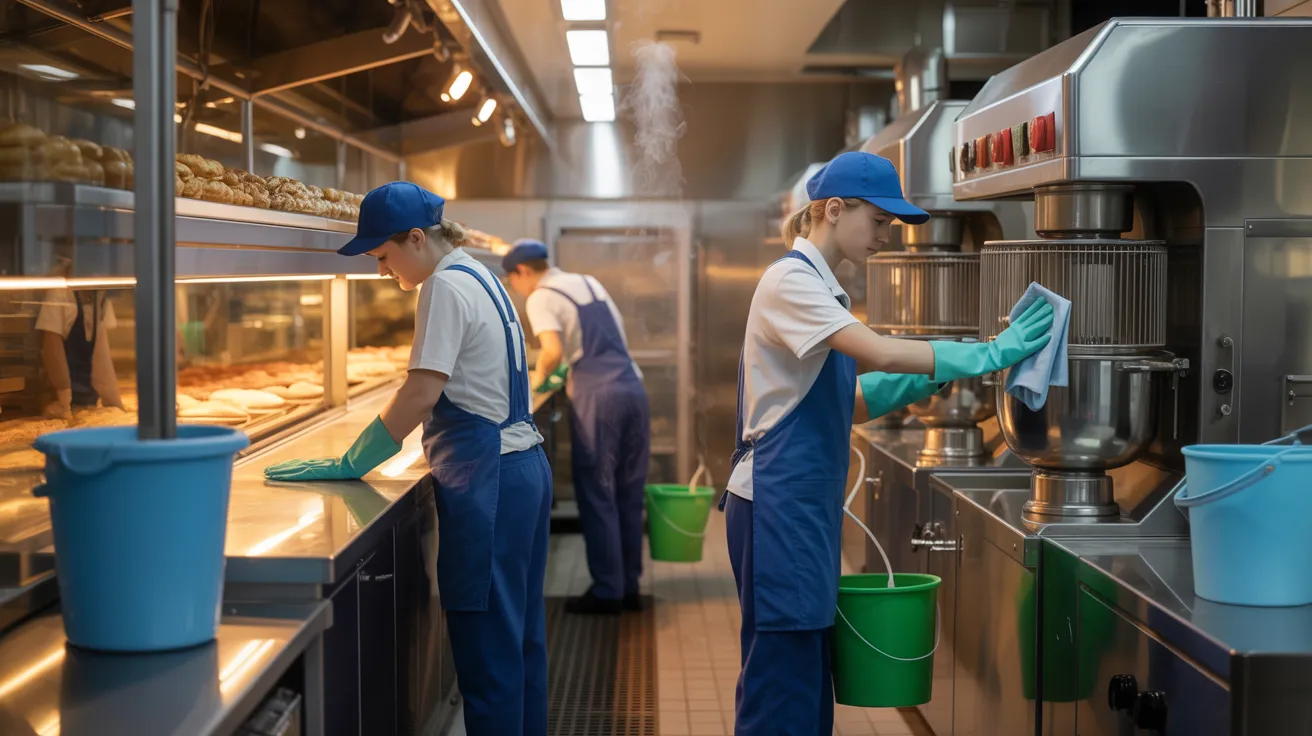
Commercial hygiene experts located in Brampton ensure food service establishments, commissaries, bakeries, warehouses, and food service vehicles in compliance. They disinfect frequently handled areas, food-contact areas, equipment, floors, drains, restrooms, and food handling areas using approved sanitizers, in correct dilution, and using documented contact periods.
Important Highlights
- Food safety cleaning professionals from Brampton service restaurants, grocery departments, commissaries, warehouses, bakeries, schools, mobile vendors, and allergen-sensitive operations.
- They clean frequently contacted areas, food-contact equipment, kitchens, floors, drains, restrooms, and storage areas using sectional methods to avoid cross-contamination.
- Qualified specialists verify proper chemical concentration, alignment, and exposure duration, then file conclusion with samples, inspections, and corrective-action records.
- Daily, periodic, and cyclical activities assigned by location comprise cleaning timelines founded on hazard, production rate, changeovers, releases, and standards.
- Insurance, color-categorized equipment, HACCP, sanitation expertise, safety training education, references, and inspection-ready maintenance paperwork are vital supplier traits.
Food Safety Cleaning Requirements for Brampton Establishments
You must comply with food safety cleaning if your facility is subject to health department oversight, food standards, or HACCP requirements. This covers dining establishments, employee cafes, distribution hubs, market sections, meat shops, fish stands, retail outlets, and food service kitchens.
You also need proper hygiene cleaning in distribution centers, food processing plants, freezer facilities, commercial bakeries, educational nutrition programs, event spaces, and catering hubs. Temporary and mobile establishments count too, including mobile kitchens, festival sellers, and temporary food stands. If your staff prepare raw materials, portion finished foods, warm up meals, or maintain allergen storage, your facility needs written cleaning standards. In Brampton, food safety isn't optional; it's part of statutory, business, and public health compliance.
What Do Brampton Cleaning Experts Clean?
Your facility requires professional cleaners who sanitize all high-touch areas, kitchens, all floor types, and restrooms for food safety and health code adherence. These specific areas are emphasized because they represent the most significant contamination risk, trip and slip dangers, and breaches of sanitation codes.
Knowing their service areas enables you to validate your facility's cleaning meets operational demands and regulatory compliance.
High-Touch Surface Sanitizing
Professional Brampton facility managers know that high-touch surfaces need cleaning since these areas hold pathogens and debris. You must have a scheduling system for sanitizing entry points, contact surfaces, control panels, railings, shared devices, registers, and cold storage handles. Employing touchpoint mapping, experts locate every commonly touched point and assign cleaning frequency
confirm that sterilization is effective and facilitate corrective actions if results come exceed target ranges
Food Prep Areas, Flooring, and Sanitary Facilities
Brampton cleaning professionals will address kitchens, floors, and restrooms since each space presents separate food safety concerns, slip-and-fall, and public health challenges. In industrial kitchens, you need grease removal from cooking stations, appliance surfaces, drain systems, preparation areas, and backsplashes to reduce contamination and pest pressure.
Floor care that is recorded should also be anticipated. Technicians scrub and extract buildup from grout, tile, and vinyl flooring, then apply suitable dehydration methods so you can limit falls and meet regulatory standards. They also address entryways where moisture and debris migrate indoors.
Restroom sanitation involves sanitizing touchpoints, fixtures, partitions, dispensers, and waste containers, restocking supplies and controlling odours. They also service restaurant moprooms, where chemical storage, sink hygiene, and drainage conditions can affect sanitation compliance and staff safety daily.
Why Food Safety Cleaning Matters in Brampton
Brampton businesses need to establish food-safe cleaning standards for meeting legal standards and obtaining approval. You also reduce cross-contamination by cleaning and sanitizing food-contact surfaces, equipment, and high-touch areas correctly. Most importantly, you safeguard community wellness by reducing the chance of food poisoning in your establishment.
Regulatory Code Requirements
Food businesses in Brampton face mandatory safety protocols, making food safety cleaning critical to fulfilling health code requirements, defending patrons, and preventing enforcement action. You must maintain clean food preparation areas, verifiable cleaning logs, appropriate product handling, and traceable training practices that meet municipal and provincial inspection expectations.
Inspectors examine your operation to confirm that your hygiene protocols maintains protected inventory management, machinery hygiene, garbage disposal, and facility cleanliness.
Cross-Contamination Prevention
Maintaining regulatory compliance copyrights on your power to stop cross-contamination during everyday food preparation and sanitation. You must separate raw ingredients from ready-to-eat foods, sterilize work zones between assignments, and position cleaning agents away from food surfaces. Clear procedures reduce transfer risks and support consistent compliance during inspections.
You should establish allergen separation to prevent major allergens from touching shared surfaces, containers, or equipment. Use dedicated cutting boards, color-coded tools, and careful equipment identification so staff don't mix items during preparation or service. Mandate washing hands following uncooked proteins, shellfish, egg items, or allergen products. Change cleaning rags frequently, and verify sanitizer strength with test strips. When staff members receive training on these procedures each work period, you build a more hygienic, secure workplace that meets Brampton's food safety expectations daily.
Public Health Safeguarding
Should food safety cleaning collapse, you don't simply encounter inspection problems—you increase the potential of contamination-related sickness harming customers, staff, and the wider Brampton population. You also undermine your responsibility in safeguarding community wellness, especially in busy food facilities where contamination can spread quickly through surfaces, equipment, and touchpoints.
You must establish sanitation protocols that remove contaminants, disinfect correctly, and confirm effectiveness. This requires following exposure times, employing authorized sanitizers, documenting procedures, and instructing staff to meet health-unit expectations. These controls promote pathogen reduction by limiting pathogens before contaminating food or surfaces. Across Brampton, effective sanitation safeguards vulnerable groups, limits outbreak risk, and shows your diligence. When you maintain proper protocols, you exceed regulations—you substantially lower hazards and facilitate secure food handling throughout the area.
How Does Cleaning Support Food Safety Compliance?
Comprehensive cleaning schedules promote food safety compliance by minimizing contamination hazards, limiting pathogen development, and ensuring your facility complies with sanitation requirements under HACCP-based programs and public health regulations. You confirm that product-contact areas are visibly clean and microbiologically controlled, supporting documented preventive controls and inspection readiness.
Rigorous detailed resource cleaning standards also reinforce allergen management by clearing residues that can lead to undeclared allergen exposure.
How Do You Arrange Commercial Cleaning Services?
Ramp up cleaning frequency during high-volume production, production changeovers, spillage occurrences, and after maintenance work.
facility shutdowns, seasonal soil buildup, or periods of elevated pest concerns. If your facility hosts promotions, catering, or public functions, schedule cleaning right prior to and following for effective event turnaround
Finding Quality Brampton Cleaning Experts: A Guide
Evaluate providers first by food-safe sanitation requirements rather than price alone. You must ensure each provider understands CFIA, public health, and HACCP requirements for your business. Request proof of insurance, WHMIS compliance, staff training documentation, and supervision methods. Check technician awareness of contamination prevention, chemical safety, and documented sanitation practices.
You should further examine operational reliability and accountability. Request references from food facilities in Brampton, then review response times, corrective action plans, and communication standards. Validate the company supports supplier audits and can supply compliance documentation to regulators or third parties. Confirm equipment is maintained, colour-coded tools are used appropriately, and site-specific hazards are recognized. A experienced service ensures regulatory compliance, product quality, and your reputation in the market.
What details should a sanitation plan contain?
Create a documented strategy that defines every sanitation duty, guideline, and expectation prior to beginning production. You should list cleaning schedules, authorized products, mixing ratios, exposure periods, equipment, and testing procedures for each area, section, and machine. Don't forget to add pre-operational inspections, corrective actions, and employee training requirements.
Your plan should also include cross-contamination controls, waste handling, pest-prevention measures, and documented schedules for restrooms, drains, floors, and food-contact areas. Specify how you'll separate raw and ready-to-eat processes, help with ingredient tracking, and maintain accurate allergen labeling through validated cleaning between product changes. You should define accountability, preserve signed records, and check results against regulatory standards, HACCP controls, and customer requirements. When gaps appear, revise procedures immediately and re-educate staff.
Popular Inquired Inquiries
Do cleaning services operate during overnight shifts at Brampton properties?
If you operate regulated spaces, you'll also require records that support inspections and ensure quality assurance.
Do sanitation professionals offer emergency spill response solutions?
Yes, you can expect Brampton cleaning experts who provide hazard containment services. They handle contamination, evaluate dangers, isolate affected areas, and begin swift cleanup to reduce exposure and prevent business interruption. You should confirm response times, professional credentials, PPE protocols, and waste management. If your facility must comply with industry standards, choose a provider that records events, follows compliant standards, and enables compliance verification.
Do eco-friendly disinfectants operate safely on food-handling equipment?
Definitely, natural disinfectants perform safely on food-contact surfaces if you purchase items marked food-safe that meet compliance requirements. You should check exposure duration, concentration levels, and rinsing needs before use. Botanical formulations decrease chemical burden, but you require proof of efficacy against target microorganisms. To ensure residue free surfaces, implement manufacturer instructions exactly and ensure your disinfecting agent adheres to relevant food safety standards.
Will cleaning schedules accommodate production fluctuations?
Absolutely, cleaning schedules enable modification for seasonal variations. Revise timing, personnel, cleaning agents, and confirmation procedures to correspond to production rhythms while preserving compliance standards. Lower production interruptions through timing sanitization amid production shifts, high demand periods, and operational patterns. Further modify procedural documents, training, and monitoring protocols to account for temporary risks, novel allergens, or increased soiling. Continuous reviews keep your program functional.
Are professional cleaning companies offering staff training on sanitation best practices?
Indeed, professional cleaners typically provide staff training on proper hygiene. Your team receives training on proper chemical use, exposure durations, preventing cross-contamination, equipment disassembly, and record-keeping. They generally adhere to training with HACCP, GMP, and CFIA or local public health criteria. Many also execute compliance inspections to verify compliance, reveal issues, and strengthen improvement measures. This assists you to establish reliable processes, pass inspections, and reduce food safety risks each day.
Final Thoughts
Through engaging Brampton commercial cleaning and food safety specialists, you accomplish much beyond organizing—you keep your operation prepared for audits and your procedures stay aligned with regulations. From kitchen spaces to processing areas, all maintained surfaces and kept corners reduce contamination risks and prevent significant costs. Through booking service on suitable timelines and adhering to a comprehensive cleaning program, you ensure protection for your team, your patrons, and your good name. Within strict regulatory frameworks, proper sanitation cannot be considered optional—they represent good business practice.
Comments on “Trusted Commercial Cleaning Team”